Medical aid organisation Doctors Without Borders, known by its French initials MSF, which assists vulnerable populations in Ethiopia and across the Horn of Africa region, notes that the US cuts “upended global health and humanitarian programs around the world” in 2025. “The human costs [around the world] have been catastrophic,” MSF said in a statement this week. It said in Somalia, aid disruptions caused shipments of therapeutic milk to stop for months, leading to a rise in child malnutrition cases at the MSF clinic there; in Renk in South Sudan, funding cuts forced an aid organisation to stop supporting hospital staff, which left gaps in maternity care; and in the Democratic Republic of the Congo, the dismantling of USAID caused the cancellation of an order of 100,000 post-rape kits, which included medication for preventing HIV. In Ethiopia, which used to be the largest recipient of USAID funds in sub-Saharan Africa prior to Trump’s cuts, the funding shortfalls have created critical gaps and put more pressure on other organisations. In Tigray, “donor funding cuts have placed additional strain on an already fragile public health system,” Joshua Eckley, MSF head of mission for Ethiopia, told Al Jazeera. “As aid actors scale back or suspend activities in the region due to funding constraints, the most vulnerable are experiencing reduced access to medical care, water and sanitation services … while overall humanitarian needs continue to exceed the collective capacity.”
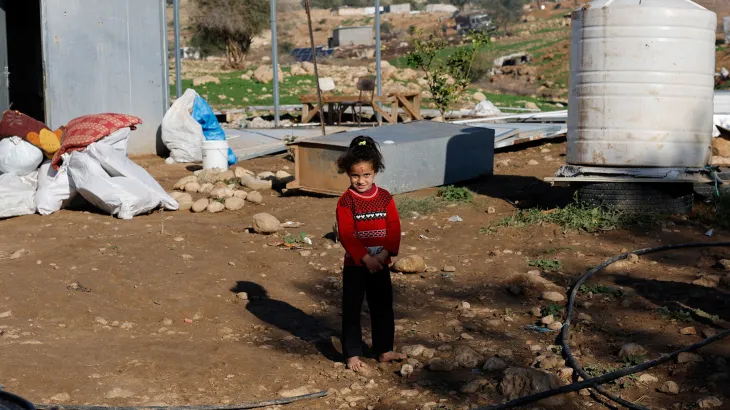
When the music stops, Naif Ghawanmeh, 45, takes a seat in front of the fire. The night is chilly, and for the first time in weeks, everything is still for a moment – the Israeli settlers’ celebrations have finished for the day.
But the village of Ras Ein al-Auja, situated in the eastern West Bank’s Jericho governorate, has been all but wiped out.
The village was one of the last Palestinian herding communities in this part of the Jordan Valley, but now, the herders’ sheep have gone – most of them stolen or poisoned by settlers or sold off by villagers under pressure. Their water has been cut off – the Ras Ein spring declared off-limits by the neighbouring settlers for the past year.
And for the past two weeks, most of the community’s homes have been dismantled. Many of the families forced out have burned their furniture before they have left, not wanting to leave it for the invading settlers to use.
“By God, it’s a difficult feeling,” Ghawanmeh says. He is at a loss for words, fidgeting by the fire and at times rubbing his face in misery and exhaustion. “Everyone left. Not one of them [remains]. They all left.”
Since the start of this year, about 450 of the 650 Palestinian inhabitants of Ras Ein al-Auja have fled their homes – for many the only place they have ever lived – because of violence by Israeli settlers.
Other than the 14 Ghawanmeh families, including a large number of children, who say they have nowhere else to go, the rest are packing up and leaving in the coming days.
This rapid displacement of hundreds of people marks the largest expulsion from a single Bedouin community as a result of Israeli settler violence in modern times – a feat that has elicited taunting celebrations by the encroaching settlers and left lives in ruins for Bedouin families now deprived of shelter, livelihoods and community.
No land, no sheep, no water, no safety
Until the New Year, the people of Ras Ein al-Auja had held out on their lands despite an onslaught of physical attacks, thefts, threats, movement restrictions and destruction of property by settlers – a state of being that is now all too common for rural Palestinian communities across the West Bank.
Settlers have been enabled by rapid growth in the number of settlement outposts springing up across the West Bank. Settlements and these outposts are illegal under international law. They are also built without the legal permission of Israeli authorities but in practice are largely tolerated and offered protection by Israeli forces, especially in recent years under the far-right government of Prime Minister Benjamin Netanyahu.
International law stipulates that occupying powers like Israel must not move their own civilian populations into occupied territories, such as the West Bank, where about 700,000 settlers now reside.
In December, another 19 settler outposts built without government approval were retroactively approved by Israel’s government as official settlements. In all, the number of settlements and outposts in the West Bank and occupied East Jerusalem has risen by nearly 50 percent since 2022 – from 141 to 210 now.
This recent explosion of settler outposts has given way to a more recent yet even more dangerous phenomenon: shepherding outposts.
Each of these outposts mimics the Bedouins’ way of life but with settlers’ own grazing flocks. They are typically run by a single armed Israeli settler supported by several armed teenagers often funnelled in by government-funded programmes intended to support “at-risk” troubled youth.
Using animal grazing as a means to overrun Palestinian shepherds and seize their lands, such settlers had managed by April 2024 to take over about 14 percent of the West Bank, according to the Israeli NGO Kerem Navot. That figure has increased since then by at least tens of thousands of dunums (1 dunum equals 0.1 hectares and a quarter of an acre), according to Kerem Navot’s founder, Dror Etkes.