Ukraine’s security guarantees: What are they and why might they fall short?
In early January, leaders from more than 30 Western countries gathered in Paris, France, to sketch out a new framework of security guarantees for Ukraine that would take effect if a ceasefire with Russia were to be agreed.
The so-called “coalition of the willing” issued declarations of intent, including plans for a United States-led ceasefire monitoring mechanism and the possible deployment of multinational forces led by France and the United Kingdom, to ensure Ukraine’s defence and deter future aggression.
French President Emmanuel Macron called the guarantees “robust”, while British Prime Minister Keir Starmer said in the event of a deal, the UK and France “will establish military hubs across Ukraine and build protected facilities for weapons and military equipment to support Ukraine’s defensive needs”.
Others were more cautious.
Chancellor Friedrich Merz said German forces could join the initiative to monitor a ceasefire, but would be based in a neighbouring country.
On Sunday, while on a visit to Lithuania, Ukrainian President Volodymyr Zelenskyy said the government was “100 percent ready” to send an agreement on security guarantees to the US Congress and Ukrainian Parliament for ratification.
“For us, security guarantees are first and foremost guarantees of security from the United States. The document is 100 percent ready, and we are waiting for our partners to confirm the date and place when we will sign it,” Zelenskyy told a news conference in Vilnius.
However, the document has yet to be made public and details on how they would be enforced in practice remain unresolved.
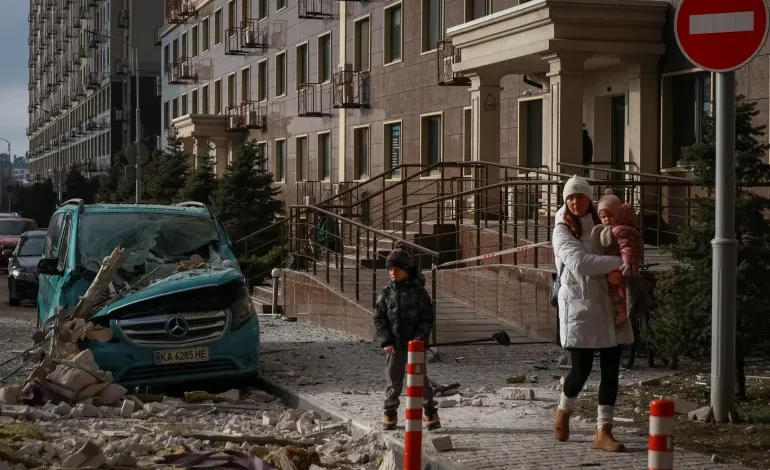
Many Ukrainians feel uncertain about their security, both now and when imagining a post-war future.
“Frankly, when I hear security guarantees, I am sceptical,” said Omelyan. “If there is commitment from them to secure Ukrainian independence, with money, with political support, with military supplies, with technology, then it is all serious.”