The Crimean Tatar movement trying to ruin Russia’s army from within
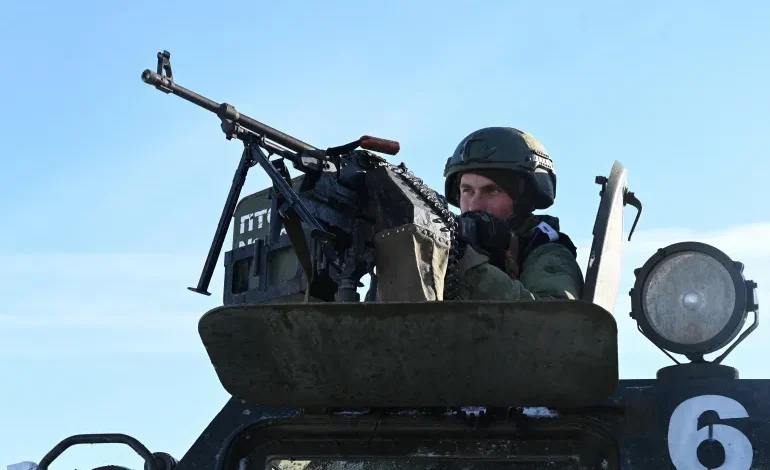
On the weekend, a power cut shut down a train line carrying Russian weapons and supplies to the front line through the region of Bryansk in western Russia near the Ukrainian border.
But this was no ordinary blackout. It was caused by a fire at a nearby substation set by an agent of the Ukrainian resistance movement, Atesh.
“Atesh precisely targets the weak points of the enemy’s power grid, paralysing their rear,” the group announced to its 52,000 followers on its Telegram channel.
While Russia strengthens its grip over occupied territory in Ukraine, its forces are facing resistance not only on the front lines but from the back as well. Among the so-called partisan groups, Atesh – whose name means “fire” in Crimean Tatar – has emerged as the most prolific, claiming responsibility for more than half of the sabotage attacks on Russian-controlled territory last year.
“We are currently in a war of attrition, and the role of internal resistance is becoming decisive,” the organisation’s coordinator told Al Jazeera over Telegram.
“The occupiers cannot guard every truck or every metre of rail in their rear.”
Atesh was founded in September 2022, seven months after the Russian military mounted a full-scale invasion of its western neighbour. While its core consists of Crimean Tatars, an ethnic minority with long-held grievances against Moscow’s rule, members also include Ukrainians and even a handful of Russians and Belarusians, according to the representative.
“We realised that Crimea and other captured territories would not simply wait for liberation; they must become a thorn in the occupier’s side from within,” said the representative, who cannot be named for safety reasons.
“We are working for the systemic collapse of the Russian military machine from within. We are ensuring that every Russian soldier on our soil feels unsafe, and their logistics, equipment and headquarters are reduced to ashes.”
‘Sabotage operations’
Acts of sabotage have been taking place on Russian territory since the full-scale invasion of Ukraine began, starting with a wave of arson attacks on army draft offices.
Since then, railroad infrastructure and supply trains for Russian troops have become the preferred targets for saboteurs seeking to slow down the Kremlin’s war machine. Among them are antiwar Russians and Belarusians, including underground networks such as BOAK (the Combat Organisation of Anarcho-Communists) as well as saboteurs-for-hire that Ukrainian agents have recruited online.
“Sabotage operations are often coordinated by the Ukrainian intelligence and the SBU [Security Service of Ukraine] and conducted by either people supporting Ukraine or other persons recruited under the promise of a financial reward, threats or deceit,” Olha Polishchuk, research manager for the Armed Conflict Location and Event Data (ACLED) conflict monitor, told Al Jazeera.
“It may be difficult to decouple Ukraine-led operations from partisan-led ones. There is often coordination between the two. Sometimes, we cannot establish a direct link to the Ukrainian government, but we know that persons involved in sabotage were recruited online by unidentified actors.”
Russian intelligence has deployed similar tactics, reportedly paying local criminals to target logistics both in Ukraine and elsewhere in Europe.
According to an ACLED report, Atesh was responsible for more than 50 percent of the acts of sabotage in Russian-occupied Ukraine in 2025.
Dozens of its operations were reportedly within Russia, including setting fire to a locomotive in Rostov and destroying an air defence factory’s communications tower in Tula, south of Moscow.
“The impact is difficult to estimate,” Polishchuk said.
“A lot of sabotage activities have a limited effect and may cause inconveniences and resupply delays. This effect, however, can accumulate and force Russia to spend additional resources on repairs, security measures and policing the local population.”
Although Atesh’s claims of responsibility cannot be independently confirmed, the group routinely broadcasts the coordinates and purported video evidence of their actions over Telegram.
“We strike at the enemy’s most vulnerable points,” the Atesh representative said.