|Europe should prepare for Greenland’s annexation and end of NATO: Experts
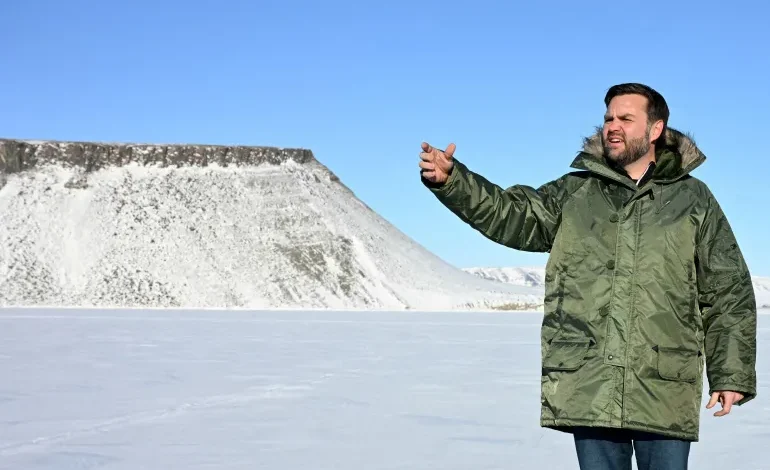
US President Donald Trump’s abduction of Venezuelan President Nicolas Maduro on January 3 has emboldened him to proceed with the annexation of Greenland, a Danish-owned, self-governed territory, spelling the effective end of NATO and furthering Russia’s war aims in Ukraine, experts tell Al Jazeera.
The day after Maduro’s kidnap by US forces, Trump made Europe fretful – a sport of which he never seems to tire – when he told The Atlantic, “We do need Greenland, absolutely. We need it for defence.”
White House Deputy Chief of Staff Stephen Miller said, “It has been the formal position of the US government since the beginning of this administration … that Greenland should be part of the United States.”
“The move on Venezuela illustrates the Trump administration’s determination to dominate the Western Hemisphere – of which Greenland geographically is a part,” said Anna Wieslander, Northern Europe director for the Atlantic Council, a think tank.“Should the darkest hour come and the United States uses military force to annex Greenland, the essence of Article 5 and collective defence within NATO would lose its meaning,” she said.
Article 5 is NATO’s mutual defence clause, committing allies to come to each other’s aid.
‘NATO would be a shadow of itself’
“You could argue that if you marry what’s happening in Ukraine to a possible invasion of Greenland, one could make the argument that it could be a deadly one-two combination that would basically ruin the alliance,” said Chicago University history professor John Mearsheimer. “NATO would be a shadow of itself. It would effectively be wrecked.”
Yet when Europe’s leaders met White House officials in Paris to design security guarantees for Ukraine, they said nothing in public about Venezuela or Greenland.
“The priority is Ukraine, European defence and European security, and keeping the Americans in,” international affairs professor Konstantinos Filis at the American College of Greece told Al Jazeera.
But Europeans see the writing on the wall, and are merely buying time, believed Keir Giles, Eurasia expert for Chatham House, a think tank.