‘No work’: India’s Alang, the world’s largest graveyard of ships, is dying
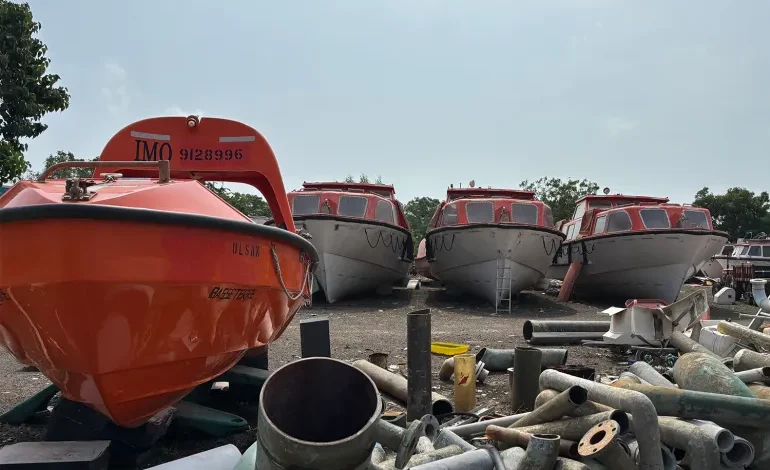
Standing on the windswept coastline of the Arabian Sea in the western Indian state of Gujarat, Ramakant Singh looks towards the empty, endless horizon.
“In the olden days, ships lined up at this yard like buffaloes before a storm,” says the 47-year-old. “Now, we count the arrivals on our fingers.”
Ramakant works at Alang — the world’s largest ship-breaking yard, located in Bhavnagar district of Gujarat, Prime Minister Narendra Modi’s home state. For two decades, Ramakant has cut apart vessels as large as oil tankers and cargo carriers that sailed in from Europe and other Asian countries for his livelihood.
With its unique tidal pattern and gently sloping beach, Alang in the 1980s became the backbone of India’s ship recycling industry, where ships could be beached and dismantled at a minimal cost.
Over the decades, more than 8,600 vessels — collectively weighing roughly 68 million tonnes of light displacement tonnage (LDT), which is the actual weight of a ship without fuel, crew and cargo — have been taken apart here, accounting for nearly 98 percent of India’s total and about a third of the global ship recycling volume.