Al-Assad’s exiled spy chief, billionaire cousin plot Syrian uprisings from Russia: Report
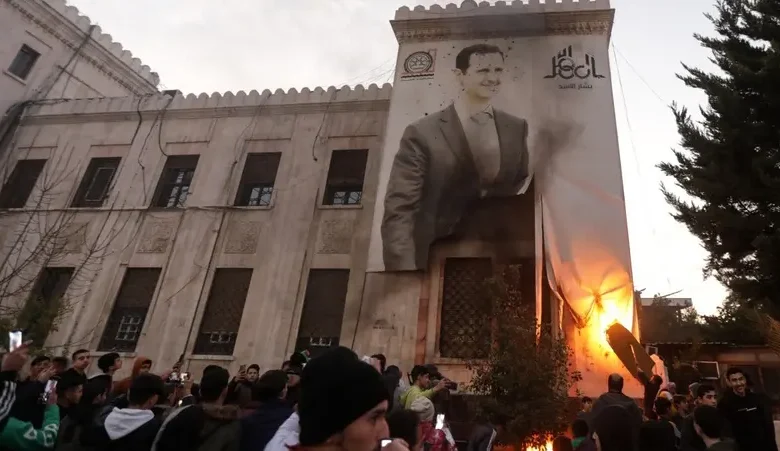
Former loyalists to Bashar al-Assad who fled Syria after the dictator’s fall are funneling millions of dollars to tens of thousands of potential fighters, hoping to stir uprisings against the new government and reclaim some of their lost influence.
Al-Assad, who escaped to Russia last December, is largely resigned to exile in Moscow, say four people close to the family. But other senior figures from his inner circle, including his brother, have not come to terms with losing power.
Two of the men once closest to al-Assad, Maj. Gen. Kamal Hassan and billionaire Rami Makhlouf, are competing to form militias in coastal Syria and Lebanon made up of members of their minority Alawite sect, long associated with al-Assad family. All told, the two men and other factions jostling for power are financing more than 50, 000 fighters in hope of winning their loyalty.
Al-Assad’s brother, Maher, who is also in Moscow and still controls thousands of former soldiers, has yet to give money or orders, said the four people close to the Assads.
One prize for Hassan and Makhlouf is control of a network of 14 underground command rooms built around coastal Syria toward the end of al-Assad’s rule, as well as weapons caches. Two officers and a Syrian regional governor confirmed the existence of these concealed rooms, details of which appear in photos seen by Reuters.
Hassan, who was Bashar’s military intelligence chief, has been tirelessly making calls and sending voice messages to commanders and advisors. In them, he seethes about his lost influence and outlines grandiose visions of how he would rule coastal Syria, home to the majority of Syria’s Alawite population and al-Assad’s former powerbase.
Makhlouf, a cousin of the Assads, once used his business empire to fund the dictator during the civil war, only to run afoul of his more powerful relatives and wind up under years of house arrest. He now portrays himself in conversations and messages as a messianic figure who will return to power after ushering in an apocalyptic final battle.
Hassan and Makhlouf did not respond to requests for comment for this report. Bashar and Maher al-Assad couldn’t be reached.
Reuters also sought comment from the Assad brothers through intermediaries, who didn’t reply.
From their exiles in Moscow, Hassan and Makhlouf envision a fractured Syria, and each wants control of the Alawite-majority areas. Both have spent millions of dollars in competing efforts to build forces.
To counter the plotters, Syria’s new government is deploying another former al-Assad loyalist – a childhood friend of new President Ahmed al-Sharaa who became a paramilitary leader for al-Assad and then switched sides mid-war after the dictator turned against him. The task of that man, Khaled al-Ahmad, is to persuade Alawite ex-soldiers and civilians that their future lies with the new Syria.
“This is an extension of the Assad regime’s power struggle,” said Annsar Shahhoud, a researcher who studied the dictatorship for more than a decade.
“This competition continues now, but instead of the goal being to please Assad, the focus is on finding his replacement and controlling the Alawite community.”
Details of the scheming are based on interviews with 48 people with direct knowledge of the competing plans. All spoke on condition of anonymity.
The governor of the coastal region of Tartous, Ahmed al-Shami, said Syrian authorities are aware of the outlines of the plans and ready to combat them. He confirmed the existence of the command-room network as well, but said it has been weakened.
“We are certain they cannot do anything effective, given their lack of strong tools on the ground and their weak capabilities,” al-Shami told Reuters in response to questions about the plotting.
For now, the prospects of a successful uprising seem low.
Chief plotters Hassan and Makhlouf are virulently at odds with one another. Their hopes are fading to win backing from Russia, once al-Assad’s most powerful political and military supporter. Many Alawites in Syria, who also suffered under al-Assad, mistrust the pair. And the new government is working to stymie their plans.
In a brief statement in response , the government’s Alawite point man al-Ahmad said the “work of healing – of uprooting sectarian hatred and honoring the dead – remains the only path toward a Syria that can live with itself again.”
Hassan claims control of 12,000 fighters, while Makhlouf claims control of at least 54,000, according to their factions’ internal documents. Commanders on the ground said fighters are paid a pittance and taking money from both sides.
The exiles don’t appear to have mobilized any forces yet. Reuters could not confirm the fighter figures or determine specific action plans. Tartous governor Al-Shami said potential fighters numbered in the tens of thousands.