Meet the US’s drug running friends: A history of narcotics involvement
As the United States ramps up strikes on Venezuelan boats and threatens a land invasion to fight alleged drug trafficking networks, President Donald Trump has pardoned Honduras’s former President Juan Orlando Hernandez and released him from a 45-year prison sentence in the US for weapons and drug trafficking offences.
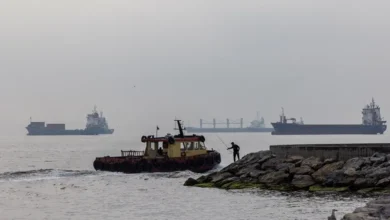
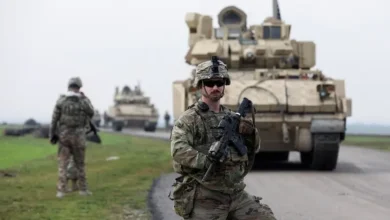
Since September, US military strikes on at least 21 Venezuelan boats in the Caribbean and eastern Pacific have killed more than 80 people. The Trump administration claims these boats were trafficking drugs to the US but has not backed these allegations with any evidence.
Meanwhile, the US itself has a long history of leveraging narcotics smuggling and drug gangs to support its foreign policy goals in various parts of the world, beginning with the 19th-century Opium Wars with China.
Is the US really fighting a drug trafficking crisis in Venezuela?
Cocaine production hit a record 3,708 tonnes globally in 2023, according to the United Nations Office on Drugs and Crime (UNODC).
However, it found that cocaine originates in Colombia, Peru and Bolivia, and most US-bound cocaine routes go through Colombia, Peru and Ecuador, not Venezuela, which serves as only a minor transit corridor.
The US Drug Enforcement Administration (DEA) reported last year that 84 percent of US-seized cocaine comes from Colombia and did not mention Venezuela as a source.
If Trump wants to clamp down on drugs, why did he pardon Hernandez?
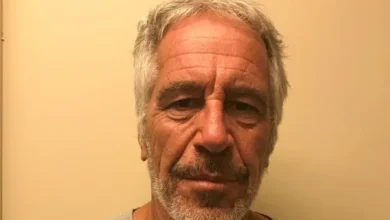
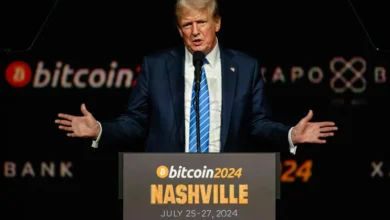
US President Donald Trump pardoned the drug conviction of Juan Orlando Hernandez, the former president of Honduras and member of the country’s right-wing National Party, on November 28.
On Monday this week, Hernandez was released from his 45-year prison sentence at the high-security facility of USP Hazelton in West Virginia in the US.
Hernandez had been extradited to the US in 2022 and was found guilty of conspiring to import cocaine to the US and of possessing machineguns, in 2024.
Justifying his decision to pardon him, Trump said Hernandez had been “treated very harshly and unfairly” in a social media post on Friday.
However, some observers believe this shows that Trump’s real objective in targeting Venezuela is a desire to unseat the country’s left-wing president, Nicolas Maduro, who is accused by the US of having links to drug cartels and of even overseeing drug trafficking networks. The US recently raised a reward for information leading to Maduro’s arrest to $50m.
How has the US been involved in drug trafficking in the past?
The US has been accused of making use of drug trafficking networks to support its own aims at many points throughout history.
We take a look at nearly two centuries of US involvement in drug trafficking.
1800s: The Opium Wars
Trump has accused China of flooding the US with fentanyl in recent years, and has used the threat of trade tariffs to force it to cooperate in preventing the trafficking of this highly addictive opiate drug.
But 200 years ago, Western imperial powers such as the United Kingdom, France and the US were pushing opiates in the other direction in a bid to expand their influence through trade.
The imperial powers were facing a trade imbalance with China due to high demand in the West for Chinese goods such as tea, porcelain and silk.
Desperate to reverse this imbalance, British merchants began to smuggle Indian-grown opium into southern China. Soon, American traders had also turned to opium to boost their own exports to China.
In 1839, Chinese forces attempted to crack down on the inflow of opium, confiscating and destroying it and marking the beginning of the First Opium War. The British and Chinese engaged in naval conflict and the British emerged victorious in 1842. While the US did not militarily engage in the war, American traders were active in China and brought limited amounts of opium from Turkiye and India.
In 1844, the US and China signed the Treaty of Wanghia, their first treaty together. While this treaty ostensibly outlawed the opium trade, in practice, it opened up five ports for Western-Chinese trade in Guangzhou, Xiamen, Fuzhou, Ningbo and Shanghai, enabling US traders to expand their sales of opium.